With the demand for customised and personalised products are getting high, consumers are increasingly dictating on product personalisation which can fulfil their individual preferences. According to Blom and Monk (2003), product personalisation is a process that defines or changes the appearance or functionality of a product to increase its personal relevance to an individual. In contrast to the traditional ‘one-size-fits-all’ product, personal personalisation is a promising strategy which offer consumers a role in the product development process through product personalisation (Mugge, Schoormans & Schifferstein 2009, p79). Deloitte research shows that more than 50% of consumers expressed interest in purchasing customised products or services (Deloitte 2015).
The advantage of product personalisation is that it helps to discover the value of consumer by involving the end users to participate in the product design (Mugge, Schoormans & Schifferstein 2009). Therefore, the end personalised/customised products are closely match to the end user’s needs and want. Consequently, consumers tend to get more involved with the company and this helps to create brand loyalty. By the same time, personalized products also come with competitive advantage for companies. Company can also collect the personalisation or customisation data for their next product development.
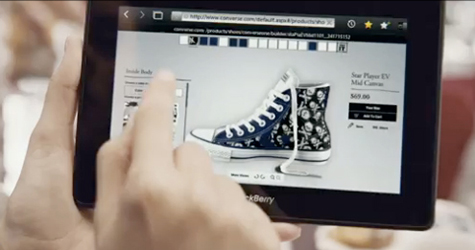
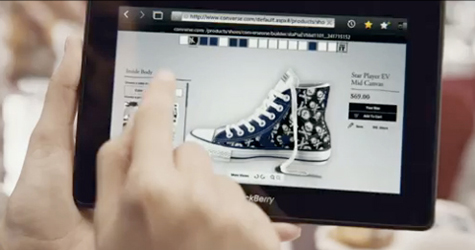
Besides that, unsurprisingly, a research shows that 1 in 4 consumers are willing to pay more for customised product or service (Deloitte 2015). For example, in the footwear industry, Nike, Puma, Adidas and Converse all have now offered customer the ability to personalised the colour and material of certain shoes products and customer appear to willingly pay a premium price for these personalised option. This is because self-expressive personalised product alters the way it expresses the identity of consumer who wear the shoes.
A study claimed that self-expressive product customisation may have motivational consequences as the customisation of the product extends an identity into the product (Kaiser, Schreier & Janiszewski 2017). If the customised product is subsequently used to pursue a goal and successful goal pursuit can affirm the extended identity, then motivation to pursue the goal should increase and performance should improve!
What is your opinion for personalisation / customisation products? Do you think product customization can influence performance?
References
Deloitte 2015, ‘Made-to-order: The rise of mass personalisation’, The Deloitte Consumer Review, pp. 1-20, <https://www2.deloitte.com/content/dam/Deloitte/tr/Documents/consumer-business/consumer-business-mass-personalisation.pdf>
KAISER, U., SCHREIER, M. and JANISZEWSKI, C. 2017, ‘The Self-Expressive Customization of a Product Can Improve Performance’, Journal of Marketing Research (JMR), vol.54, no.5, pp. 816–834.
Mugge, R., Schoormans, J. P. L. and Schifferstein, H. N. J. 2009, ‘Incorporating consumers in the design of their own products. The dimensions of product personalisation’, CoDesign, vol.5, no.2, pp. 79–97.


