With the demand for customised and personalised
products are getting high, consumers are increasingly dictating on product
personalisation which can fulfil their individual preferences. According to
Blom and Monk (2003), product personalisation is a process that defines or
changes the appearance or functionality of a product to increase its personal
relevance to an individual. In contrast to the traditional ‘one-size-fits-all’
product, personal personalisation is a promising strategy which offer consumers
a role in the product development process through product personalisation
(Mugge, Schoormans & Schifferstein 2009, p79). Deloitte research shows that
more than 50% of consumers expressed interest in purchasing customised products
or services (Deloitte 2015).
The advantage of product personalisation is that it
helps to
discover the value of consumer by involving the end users to participate in the
product design (Mugge, Schoormans & Schifferstein 2009). Therefore, the end
personalised/customised products are closely match to the end user’s needs and
want. Consequently, consumers tend to get more involved with the company and this
helps to create brand loyalty. By the same time, personalized products also
come with competitive advantage for companies. Company can also collect the personalisation or
customisation data for their next product development.
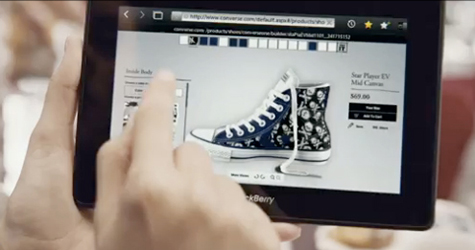
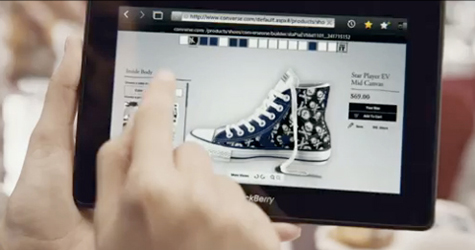
Besides that, unsurprisingly, a research shows that 1 in 4 consumers are willing to pay more for customised product or service (Deloitte 2015). For example, in the footwear industry, Nike, Puma, Adidas and Converse all have now offered customer the ability to personalised the colour and material of certain shoes products and customer appear to willingly pay a premium price for these personalised option. This is because self-expressive personalised product alters the way it expresses the identity of consumer who wear the shoes.
A study claimed that self-expressive product customisation
may have motivational consequences as the customisation of the product extends
an identity into the product (Kaiser, Schreier & Janiszewski 2017). If the
customised product is subsequently used to pursue a goal and successful goal
pursuit can affirm the extended identity, then motivation to pursue the goal
should increase and performance should improve!
What is your opinion for personalisation /
customisation products? Do you think product customization can influence
performance?
KAISER, U., SCHREIER, M. and JANISZEWSKI, C. 2017, ‘The Self-Expressive Customization of a Product Can Improve Performance’, Journal of Marketing Research (JMR), vol.54, no.5, pp. 816–834.
Mugge, R., Schoormans, J. P. L. and Schifferstein, H. N. J. 2009, ‘Incorporating consumers in the design of their own products. The dimensions of product personalisation’, CoDesign, vol.5, no.2, pp. 79–97.
Attitude is a psychological variable involved in the purchase decision process that is known to influence Consumer Behavior. These attitudes are “mental positions” or emotional feelings people have about products, services, companies, ideas, issues, or institutions (Armstrong 2018). An attitude can be positive or negative because it is based on people’s values and beliefs, they are hard to change (Solomon, Russell-Bennet & Previte 2019). However, people can also be conflicted or ambivalent toward an object, meaning that they might at different times express both positive and negative attitudes toward the same object (Solomon, Russell-Bennet & Previte 2019) .
Attitude is a psychological variable involved in
the purchase decision process that is known to influence Consumer Behavior.
These attitudes are “mental positions” or emotional feelings people have about
products, services, companies, ideas, issues, or institutions (Armstrong 2018).
An attitude can be positive or negative because it is based on people’s values
and beliefs, they are hard to change (Solomon 2019). However, people can also
be conflicted or ambivalent toward an object, meaning that they might at
different times express both positive and negative attitudes toward the same
object (Solomon 2019).
For strategic decision making that is driven by
insight, it is essential for marketers to understand and track consumer
attitudes. In the late 90s, Lego’s market share had begun to decline (Milne
2013). Kids seemed kenner to play video games and other toys, and Lego wasn’t
cool anymore. So Lego decided to hire more diverse and creative people and
fostering open innovation – but executed many of them wrongly. Lego did not
talk to their customer, and did not accept ideas for new products, comments or
suggestions (O’neill 2010). Rather, they created their product based on what
they believed consumers want. In this case of over-innovation and disconnection
from customers, the outcome was a string of very expensive failed product
launches (O’neill 2010).
The problems of Lego faced was not lack of innovative ideas, but they weren’t creating much value with its product and knowing their consumers were actually grows up in the changing market. We known that Lego has historically been a kid’s toy. However, there is a growing group of adult Lego fans and Lego was not paying attention to their adult fan base market, and without changing its form (O’neill 2010). Faced with bankruptcy in 2004, Lego no longer ignore the changes in the market and started listening to its consumers and their changing attitudes (O’neill 2010).
With the brand in maturity, brand awareness has already permeated the market and customer had set attitudes. So, the primary goal of Lego is to reconnect its consumer with the brand and change their attitudes toward the product. In this context, a cognitive advertising approach would not work as consumer already knew they could buy Lego, they just needed to persuaded to change what they are buying for.
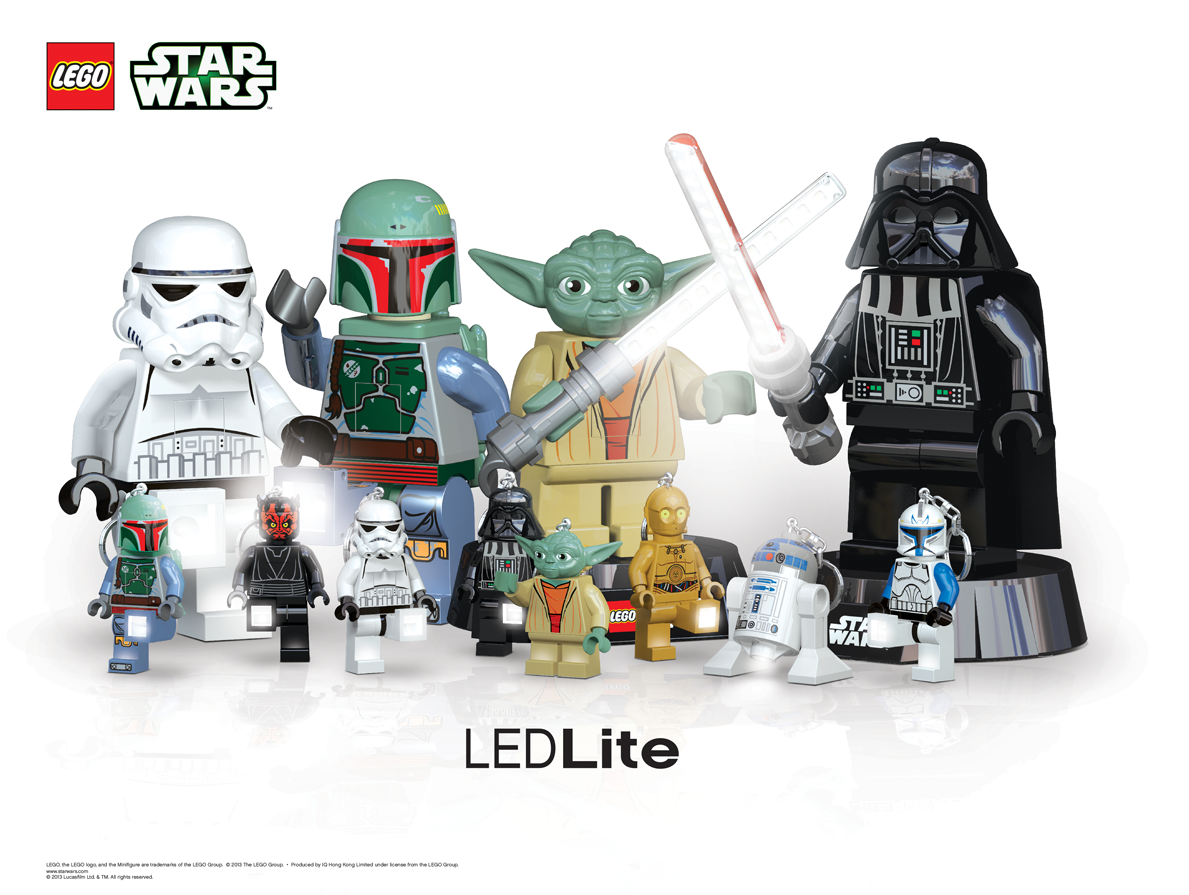
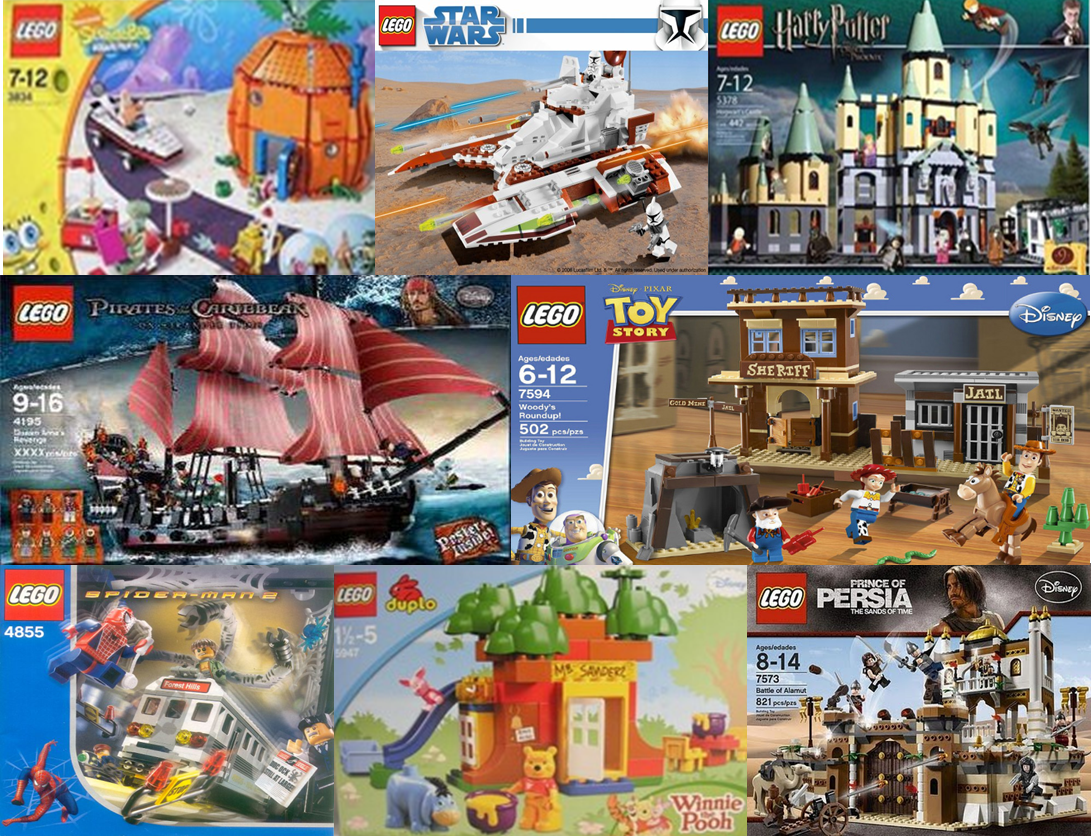
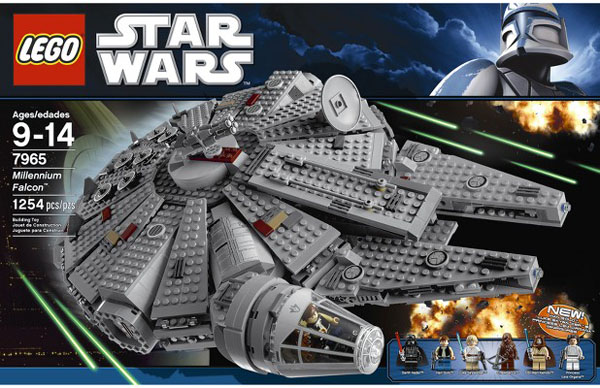
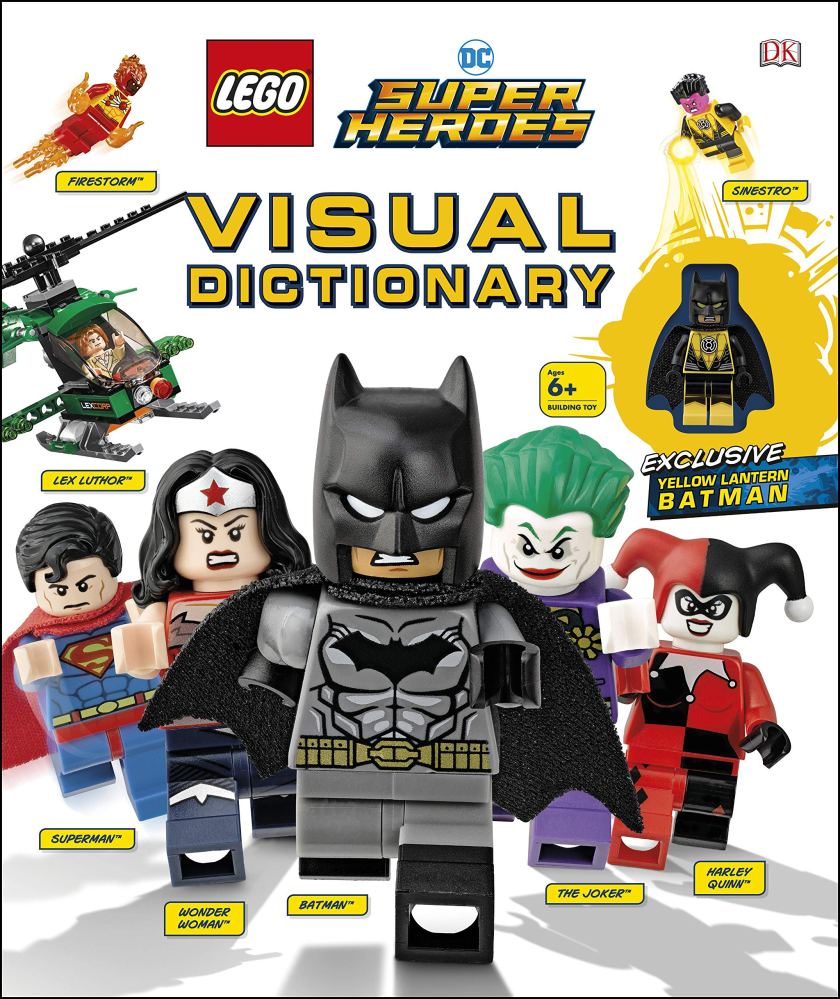
By this understanding, it led to an emotional approach to advertise its product. Since then, Lego has gone beyond the bricks, and creating an array of movies, such as Lego movies, Lego Batman, Lego Star Wars and Lego Ninjago. By adding story to the toy, it helps to create emotional attachments with consumers. In addition, Lego also start licensing partnership with brands like Star Wars, Marvel, Harry Potter and DC heros brands to gain consumer endorsement by taking advantage of how they feel for those character. This licensing strategy also seems to work for Adult! For example, my brother, a fan of Star War, has his own set of Star Wars Legos, and he does not mind investing in the toys. This shows that Lego has successfully attracted buyer that are fans of these strong entertainment properties. In fact, according to new research conducted by NPD Group in 2017, a retail analyst, sales of toys to adults have increased by almost two thirds over the past five years, and by more than 20 per cent in 2016 (Kelly 2017). Adults are actually spending more on toys than the kids!
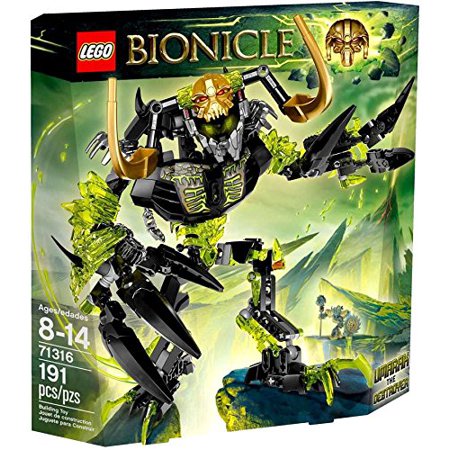
Lego realised that their adult consumers’ attitudes have changed, where they are still a major marketing force, but their needs and belief have changed. Thus, they have begun selling more product geared towards adults, such as Bionicle, a $500 5000 piece Star Wars Lego set, complete with a cool game and storyline to promote it, and an option for fans to design and purchase their own original sets (O’neill 2010). The idea of Lego is to create more challenging innovation – to change existing building systems or platforms to provide a new customer experience (Kastelle 2013). The result was a hit series of toys that generated significant sales for almost a decade. In addition, Lego also began reaching out to fans through social media as well as through Lego brand communities. Through learning the changing market, Lego has shift its attitudes toward its consumer.
References
Armstrong, G., Kotler, P. and Adam, S. 2018, Principles of marketing / Armstrong, Adam, Denize, Volkov, Kotler. Pearson Australia.
Solomon, M. R., Russell-Bennet, R. and Previte, J. 2019, Consumer behaviour : buying, having, and being / Michael R. Solomon, Rebekah Russell-Bennett, Josephine Previte. Pearson Australia.
A successful marketing will find an effective ways to persuade a customer to purchase the product or service they are selling. As a business student, we are taught to use Maslow’s Hierarchy of needs as a guideline to better understand our target market, and arguing that success depends on meeting one of Maslow’s Identified needs. Maslow’s Hierarchy of Needs might be decades old, but there’s wisdom in it that you can apply to your marketing today.
A successful marketing will find an effective ways to persuade a customer to purchase the product or service they are selling. As a business student, we are taught to use Maslow’s Hierarchy of needs as a guideline to better understand our target market, and arguing that success depends on meeting one of Maslow’s Identified needs. Maslow’s Hierarchy of Needs might be decades old, but there’s wisdom in it that you can apply to your marketing today.
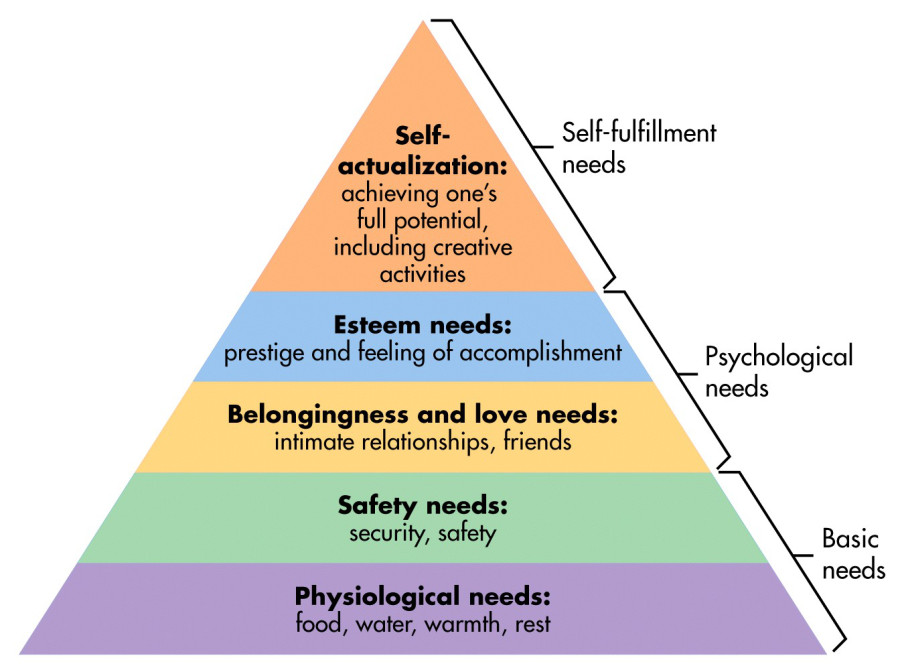
According to Solomon, Bennett and Previte (2019), Maslow proposed that human behavior and consumer decision making are motivated by five need levels in his hierarchy. Maslow’s work is represented by a pyramid, the hierarchy had five levels of human needs, from the most basic to the most evolved: Physiological, safety, belongingness, ego needs and self-actualisation (Solomon, Bennett & Previte 2019). Despite the popularity of Maslow’s hierarchy with marketers, its application has been somewhat simplistic, especially as the same product or activity can satisfy a number of different needs.
Applied to Lego, the key determinant of Lego success is closely connected to these motivational drivers. Lego has effectively appeal to more than 3 basic needs of its customer: Ego needs, Belongingness and self-actualisation.
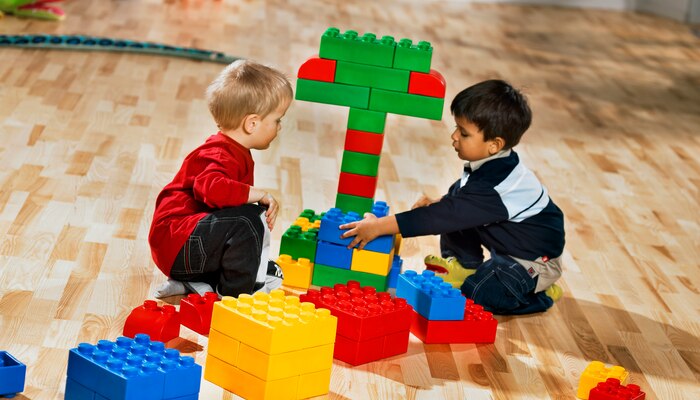
Lego has helped children develop the right mix of academic and life skills, such as creativity, problem-solving, communication and confidence. When children play with the bricks, they can use their imagination to make anything possible. They can build a starship, a castle or a dinosaur as there are endless of possibilities with Lego bricks. Connecting small pieces of Lego to create a final product that follows a child’s vision can be challenging. And achieving this task holds immense sense of satisfaction that is obvious in a child’s smile when they proudly show off their completed work. This in turn will improve children’s confidence and self-esteem. In addition, Lego play also foster confidence by helping children to develop problem-solving skills where children take picture of what they want to build and has to problem solve to make it look like the picture.
Confidence and self-esteem begin to become important as children move from playing alongside others to actively playing and collaborating with them. And basic friendships and social skills begin to emerge. During Lego play, children practice social skills and social interactions in a setting where the stakes are low. Through play, children learn to come up with ideas with others, share, cooperate, and think about other people’s perspectives. This shows that Lego helps to build social needs too.
Finally, with all other needs met, Lego also helps children to achieve self-actualisation, which they can realise their full potential of building what they want and becoming the most they can be.
According to Solomon, Bennett and Previte (2019), Maslow proposed that human behavior and consumer decision making are motivated by five need levels in his hierarchy. Maslow’s work is represented by a pyramid, the hierarchy had five levels of human needs, from the most basic to the most evolved: Physiological, safety, belongingness, ego needs and self-actualisation (Solomon, Bennett & Previte 2019). Despite the popularity of Maslow’s hierarchy with marketers, its application has been somewhat simplistic, especially as the same product or activity can satisfy a number of different needs.
Applied to Lego, the key determinant of Lego success is closely connected to these motivational drivers. Lego has effectively appeal to more than 3 basic needs of its customer: Ego needs, Belongingness and self-actualisation.
Lego has helped children develop the right mix of academic and life skills, such as creativity, problem-solving, communication and confidence. When children play with the bricks, they can use their imagination to make anything possible. They can build a starship, a castle or a dinosaur as there are endless of possibilities with Lego bricks. Connecting small pieces of Lego to create a final product that follows a child’s vision can be challenging. And achieving this task holds immense sense of satisfaction that is obvious in a child’s smile when they proudly show off their completed work. This in turn will improve children’s confidence and self-esteem. In addition, Lego play also foster confidence by helping children to develop problem-solving skills where children take picture of what they want to build and has to problem solve to make it look like the picture.
Confidence and self-esteem begin to become important as children move from playing alongside others to actively playing and collaborating with them. And basic friendships and social skills begin to emerge. During Lego play, children practice social skills and social interactions in a setting where the stakes are low. Through play, children learn to come up with ideas with others, share, cooperate, and think about other people’s perspectives. This shows that Lego helps to build social needs too.
Finally, with all other needs met, Lego also helps children to achieve self-actualisation, which they can realise their full potential of building what they want and becoming the most they can be.
There are many brands in the marketplace that possess strong gender identities. For example, Marlboro for masculine image and Channel for feminine image. And research shows that gender roles and brand concept can have a significant effect on brand extension evaluations (Jung 2006). Over the years, cross-gender brand extensions are a strategy that has quickly grown to become a vital component of strategic communications management due to the unisex trend in consumer goods (Jung 2006). So…back to the topic – LEGO, which is an unisex brand or used to be of it.
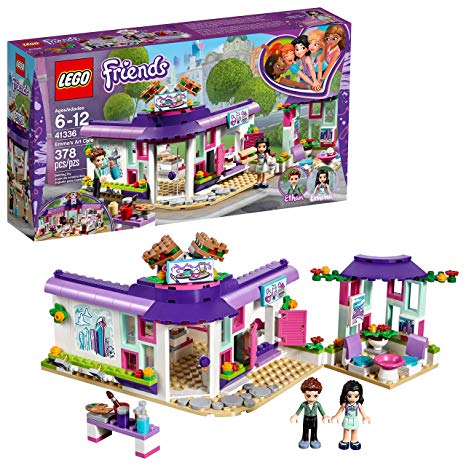
When I was a kid, I used to had a bucket of Lego bricks to played with my brother. And Lego had not much to do with gendered play and everyone played with the same bricks. However, in the past few years, it seems to have a public criticism of The LEGO Group’s gendered marketing of its toys. The criticism became intense especially after its released of “LEGO Friends” in 2012, which aimed especially at girls (Czerski 2014). The sets are predominantly pink, simple to construct and celebrating not architecture and action but beauty salons, cupcake bakeries and poodle parlours (Betts 2012). What made it even more depressing was that the company claimed it was the result of extensive research of ‘the way girls naturally build and play’ (The Lego Group, 2011).
Back to the 60s, LEGO bricks were originally marketed as toys for boys and girls equally (Madrid 2015). However, since 1980, LEGO’s product shift from its initial relatively, gender neutral to a more male dominated toy and gendered play (Madrid 2015). This can be reflected in their packaging, commercial campaign and its product.
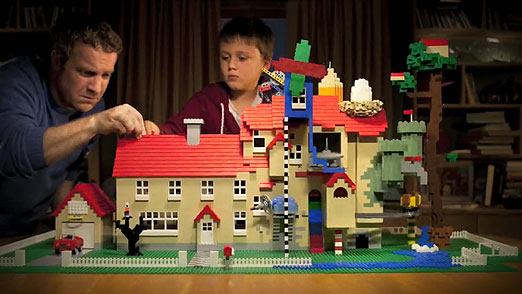
For example, we can always see commercial for LEGO highlighting some of the special moments of a father and a son bonding over building things together. It’s not a problem for LEGO featuring a father-son stories, yet, why is it so rare to see a grandma, mothers or daughter in this build together market campaign? In contrast, LEGO Friends commercials show only female children, and strongly marketed in a way that this toy is not for boys.
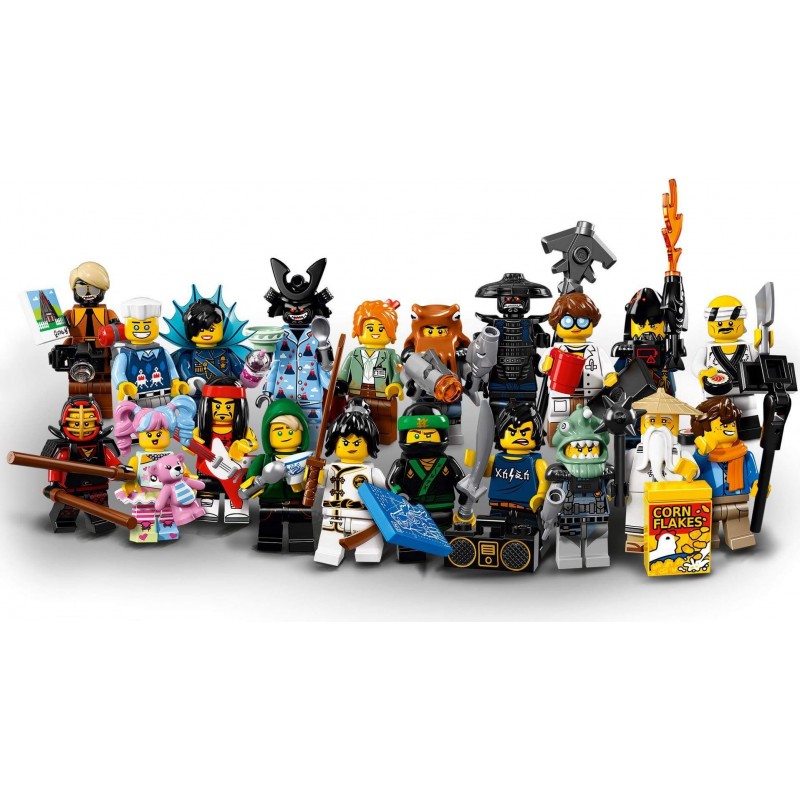
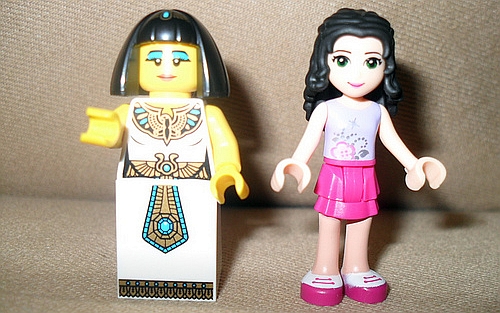
Besides that, the design of Lego’s products are also almost exclusively to boys, where girls have been largely left out. Try to look at this first plastic people, now known as ‘minifigs’, which had fun hairstyles, endearing smiles, and arms that bent and swiveled. The minifig is an iconic symbol of LEGO brand, over the years, Lego had shifted the initially gender-neutral minifigure to a gendered minifigure, which they have now got facial hair, eyelashes or lipsticks. As Lego has provided more detail in the face and bodies of minifigures, gender identification in minifigure faces became a thing and people started concern on the male:female ratio of the gendered minifigures (Ramblingbrick 2016). (To know more about the gender distribution of Lego’s minifigure, read this https://ramblingbrick.com/2016/09/29/living-with-divercity-changing-depictions-of-gender-roles-with-lego-minifigures-in-the-post-friends-era/)
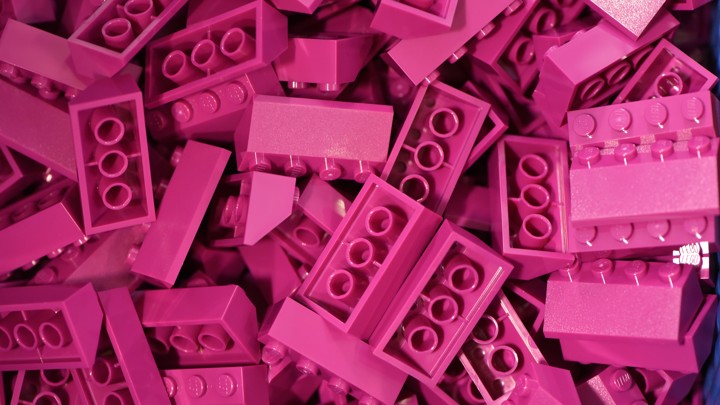
As a case in point, Lego Friends line introduced someplace called Heartlake City, which is a pastel coloured gender segregated stereotypically female suburban paradise (Czerski 2014). In order to make it optimized to girl’s interest and tastes, Lego recreated their minifig to a more doll-alike minifig, a taller and slimmer version with big, big eyes, raised button nose, pointed chin and wearing a short skirt. I know that barbie dolls are popular among girls, and Lego is trying to find way to integrate the LEGO experience into this existing model of play, but one that nevertheless perpetuated stereotypes. Besides that, the Lego Friends set covered everything in pink and purple, from the packaging to the bricks themselves. There’s nothing wrong with pink and purple as girls seem fond these colours, however, the problem is pink and purple are hardly appear in the Lego City sets marketed to boys. In addition, the friends theme sets focus on traditionally female identified tasks: bakery, beauty salon, homemaking, vet, which are rooted in deeply stereotypical and limiting roles for women in children’s toys, while you cannot find any beauty salon in the Lego City (Black, Tomlinson & Korobkova 2016). And this make me feel like they are selling the idea that girls and boys cannot play with the same toys, that girls have to have “special Lego”, which are inferior to boy toys. At least that’s what the marketing tell us.
Indeed, tens of thousands of people signed a petition complaining about the message that Lego Friends subtly sends to children about what girls should value (Lafrance 2016). I’m not surprise that there’s a lot of momentum around this Friend Line as most of the parents want their kids to have alternatives to gender-biased toy that encourage boys and girls to play together with each other.
According to Lafrance (2016), the blog mentioned that “If Lego wants to convey the idea that any kid can play with any of its products, for example, it’s strange that Friends are found on the Lego website under a subhead “Girls“, the implication being that the rest of the site is not for girls (And that girls themselves are in a subcategory of children.)”
In my opinion, it’s technically no wrong to have a gendered marketed toy for Lego (eg. Lego Friends), but Lego should change the way they marketed their toys, or else the arguments for and against Lego Friends will not be stopped.
How do you think of Lego Friends and its marketing technique? As a parent, will you buy Lego Friends for your child?
Jung, K 2006, “Cross-Gender Brand Extensions: Effects of Gender of Brand, Gender of Consumer and Product Type on Evaluation of Cross-Gender Extensions”, NA – Advances in Consumer Research, Vol. 33, eds. Connie Pechmann and Linda Price, Duluth, MN : Association for Consumer Research, Pages: 67-74.
According to Solomon, Bennett and Previte (2019), classical
conditioning is a form of learning whereby a conditioned stimulus (CS) becomes
associated with an unrelated unconditioned stimulus (US) in order to produce a behavioural
response known as conditioned response (CR). The conditioned response is the
learned response to the previously neutral stimulus.
When you think of “bricks/blocks”, what brand do you associated with? Lego?
Lego is one of the most successful toy brand. Since it was founded in 1932, countless generations of children have grown up with Lego toys. Lego says that on average, every person in the world owns 102 Lego bricks (Hall 2015). Its strong reputation becomes the ultimate competitive in the highly competitive toy industry. Lego provides its consumer an extraordinary range of playing experience, which it gives a sense of empowerment when the player has control over their imagination and ingenuity to build its own Lego. As a result, consumers are emotionally connected with the brand because it repeatedly engaged with their imagination and desires. This would be a good example of classical conditioning that consumer’s play experience and imagination are consistently paired with conditioned stimuli (Lego) in addition to visual logo.
Most of the people associated the toy blocks/bricks with
Lego, even the products are not produced by the Lego brand itself. And when we see
Lego’s logo, we straight away think of building brick with imagination. The
blocks are conditioned stimuli and Lego is the conditioned response, vice
versa. This is because we have attributed it – stimulus generalisation. Stimulus
generalisation refers to the tendency of stimuli similar to a conditioned
stimulus to evoke similar conditioned responses (Solomon, Bennett & Previte
2019).
As mentioned in my previous blog, Lego also adopted licensing
strategies based on stimulus generalisation. This strategy refers to rented
well-known names and linked it with their products or services in order to
increase in popularity (Solomon, Bennett & Previte 2019). Lego is consistently
fostering its strategy in focusing on creating new sets by adding different
features and meanings to existing bricks. And there is where Lego start
licencing with the well-established movie studio and other brands and fill its
product with the stories and characters meanings. Disney/Pixar, Warner Bros, and
Lucas Films are among the partners that have licensed media franchises such as
Star Wars, Harry Potter, Scooby-Doo, Disney princess and Jurassic Park (Handley
2019). An example of licensed product is Millennium Falcon (a starship in the “Star
Wars” franchise), respectively, it is the Lego’s best-selling product.
This strategy enabled the company to increase the value of
existing products, which made buyers willing to spend more on them. This is because
buyer perceive it as a higher value product as consumers not only can create
their own Lego story, but also can use the versatility of Lego pieces to create
their own version of toy. It’s no surprise Lego has become the one of the most
profitable toy company in the world.
Perception is the process by which physical sensation such as sights, sounds, taste, texture and smells are selected, organized and interpreted (Solomon, Bennett & Previte 2019). It is the central of sensory stimuli into a meaningful pattern, but not all sensations are perceived. Many stimuli in our environment compete for our attention, but only minority of the stimuli are being noticed (Solomon, Bennett & Previte 2019). And as an individual, we have different perceptions cause the way we interpret the meaning of a stimulus are influences by our unique biases, needs and experiences (Solomon, Bennett & Previte 2019).
Indeed, the
perceptions consumers perceive from a business and its products or services can
have a dramatic effect on consumer behavior (Solomon,
Bennett & Previte 2019). That’s why business invest a lot of money in
creating a strong stimulus to grab consumer attention. For example, Lego is a
successful brand which use visual communication to attract consumer.
Even though Lego have
a market position and brand equity their competitors can only dream of, they
have an endless appetite for creating brand expressions that capture the spirit
and wonder of their brand’s core essence. Lego is constantly focused on developing
its visual brand assets – colours, shapes and symbols that they can own and
leverage to create brand equity through all of their visual brand expressions. Lego
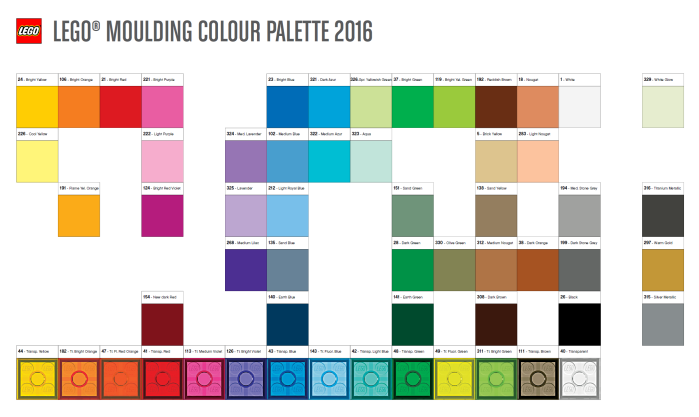
has featured a wide array of attractive pastel colours, applicable to anything
from bricks to minifigures, which allow consumers to combine them in so many
creative ways. According to CNBC news, Lego have more than 3,700 different
types of pieces, from mini figures to tubes and accessories such as wheels and
swords and more than 900 million building combinations are possible with just
six bricks of the same colour (Handley 2018). These small colourful bricks are appealing
to almost every individual, regardless of any age, attracted by the idea of
building things.
Besides of the
packaging design, Lego also communicate its brand by using featured
eye-catching, recognizable display in their advertising.
These advertising has
successfully grab attentions of the on-the-go customer and create a memorable
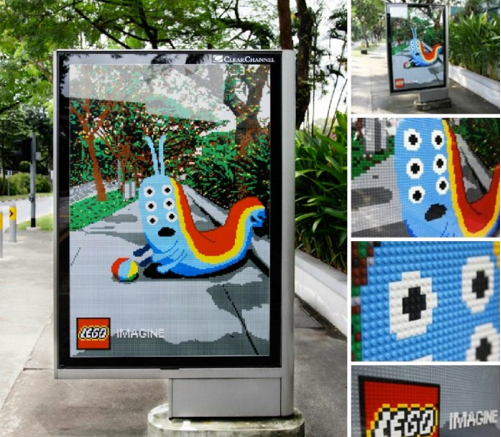
brand connection. Especially for the Lego Outdoor Billboard, Lego is using
experiential marketing theory, which seeks opportunity to connect with
consumers by engaging in a sensory way and drawing on the consumers’ personal
experience (Solomon, Bennett & Previte 2019). The Lego
advertising board was not only visibly attracted the consumer, but also allowed
consumer to has a closure contact with the actual product by ‘touching’ it.
When consumer
associate with the act of touching products, this sensation can actually affect
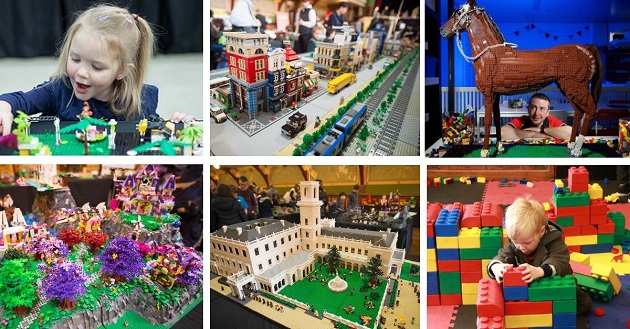
consumer response. Recent years, Lego brand is frequently looking to engage
with consumers via events to offer fun engagement and encourage hands on
building to show that building with Lego is fun and with your imagination, you
can build anything. In fact, research shows that consumers are more willing to
buy the product after they associate with the texture and quality of the
products (Solomon, Bennett & Previte 2019).
Rather than focus
solely on its iconic colored building blocks, the brand also licensing
partnership with the likes of Star Wars, Harry Potter, SpongeBob, and a number
of superhero brands to gain children endorsement by taking advantage of the
affection children feel for those characters. When licensing program design is
expertly developed, products and packaging are used as major platforms through
which to visually communicate and advance their stories in a tangible manner.
It does not only tell stories, but also encourage the consumer to become
co-creators of these stories (Mininni 2014).
As a result of accomplishing
a dazzling array of licensing deals with powerful properties, Lego has
successfully attracted buyers that are fans of these strong entertainment
properties, helping to catapult the brand into their consciousness.
I think Lego is such a
successful brand of using visual communication as a key to market its brand to
the consumer, and I believed that it is one of the reason that helps them stayed
at the top of children’s wish list.
What do you think of the visual marketing strategy of Lego? Do you know any brands that use the similar approach?
Imagine the most mind-numbing choice you’ve
faced recently, one in which the possibilities almost paralyzed you: buying a
dress, choosing a degree major, figuring out which restaurant for dinner?
I found it’s more significant when there is
overload of options and information available in online for us to decide. Indeed,
research shows that overload of options may actually paralyze people or push
them into decisions that are against their own best interest (Tugend 2010). Consequently,
when they encounter a new decision they must make, they react with a decision
that seemed to work before (Tugend 2010).
According to Solomon, Russell-Bennett and
Previte 2010, when we purchase something, we will go through consumer decision
making process to evaluate and choose products. It can be broken down into 5
steps: (1) problem recognition, (2) information search, (3) evaluation of
alternatives, (4) product choice and (5) post purchase. For example, one month
ago, I had decided to buy a Fuji Instax Mini Film and I went through a series of
decision making process stages before I bought it.
Problem recognition
The first stage of
the process is working out what exactly customer needs.
In my case I noticed that I
had almost finished all instax films for my Fujifilm Instax Mini 9 Camera, and
I decided to buy more packs of the film to restock in case of need.
Information search
Information search is
the process by which consumers survey their environment for appropriate data to
make a reasonable decision (also called pre-purchase search).
I have known what specific
brand that I need to buy but I was now faced with a choice of where to buy. Due
to my prior purchase experience of the product, I’m trying to look for two pack
of 10 films for no more than $25. So I’ve been searching around both in store
and online, which includes Officework, K-Mart, JB-HiFi, Wish and E-bay. (All of
the stores were within my ‘Evoked Set’)
Evaluation of alternatives
After gathering
relevant information, this step is to evaluate the various alternatives available
in the market and choose the best option available as per his need, taste and
pocket.
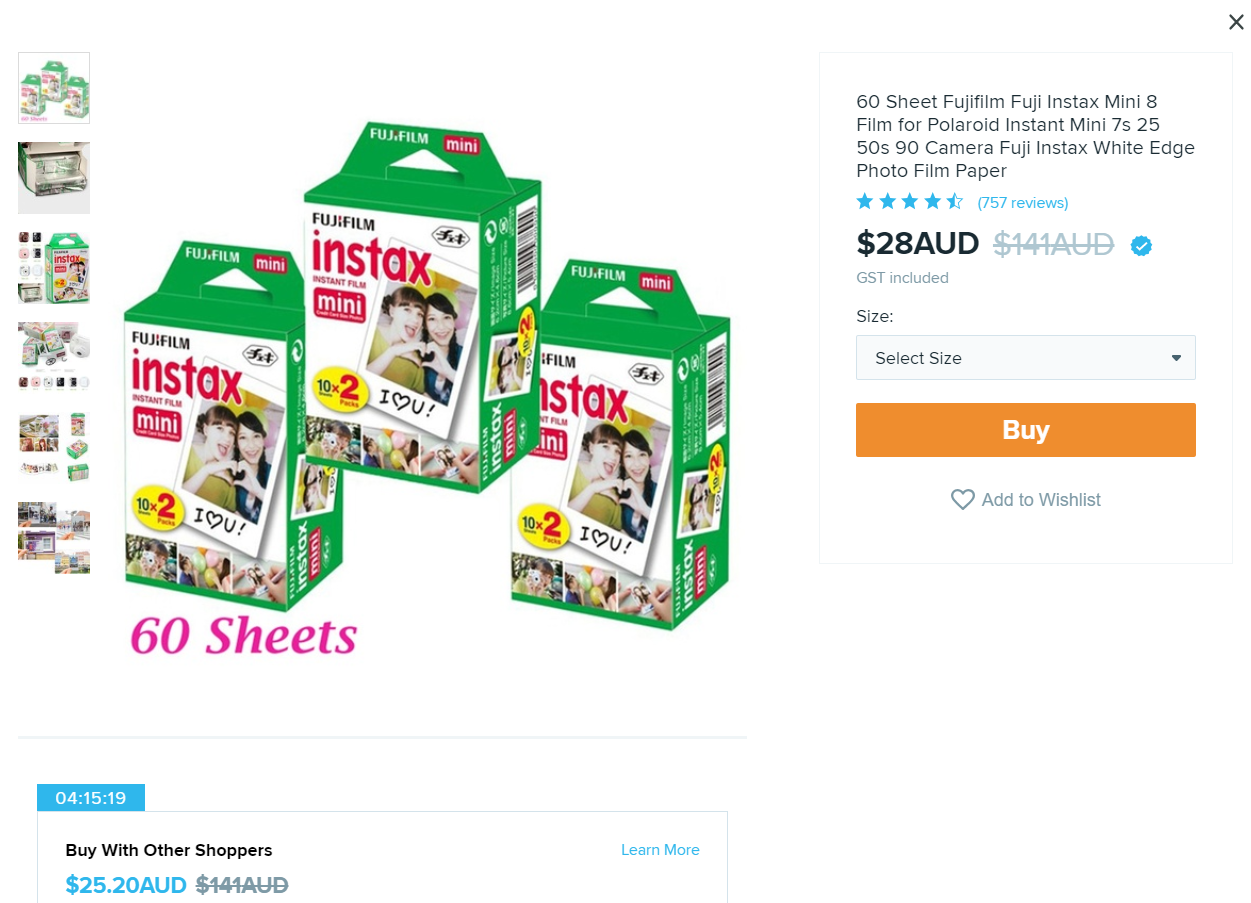
I compared several websites
about the price and the quality of product. Through online research, I found
that most of the stores sell it for around $27 for 2 packs while Wish are having
a promotion sales and only sell for $28 for 6 packs!!!!!
Product choice
The customer has now
decided based on the knowledge gathered what to purchase and where to purchase
what they desire.
I’ve choose Wish! Despite of
the long waiting and functional risk that I might face, I choose the cheapest
one because it does not cost much and I’m willing to take the risk.
Post purchase
Post purchase
evaluation refers to a customer’s analysis whether the product was useful for
him or not.
After purchase the instax
film online, it took around one month to delivery to my house. And the instax
film are totally fine which so far I’ve not encountered any functional problem.
Most of the consumer
behavior studies help to improve firms marketing strategies and increase the
effectiveness of consumers themselves by understanding of how consumers think,
feel, and reason to select. Despite the positive effect of consumer behavior on
a firm, our worst enemies are ourselves. Our desires, choices and actions often
have negative impact for businesses and for society as a whole. This is what we
so called, ‘dark side of consumer behavior’. According to Solomon (2017), the
dimensions of the ‘dark side’ of consumer behaviors include deviant consumer
behavior, consumer terrorism, addictive consumption, consumed consumer and illegal
acquisition and product use. In this article, it will concentrate on the dark
side of consumer behavior – addictive consumption.
Additive consumption refers to a physiological and/or psychological dependency on products or services (Solomon 2017). These addictive behaviors include alcoholism, drug addiction, cigarettes and social media addiction. Indeed, numerous companies gain profit from the addictive products.
In Korea, up to 30 percent
of the youngsters are addicted to the internet and social media due to the
cheap high-speed internet (Solomon 2017). Thus, internet shopping has become
their essential routine life. And this has given the market opportunity for the
big firms to gain profits from its cyber product in cyberspace. One of the famous
cyber product is ‘avatar’. Avatars are a unique cyber product that refer to
picture, drawings, or icons that users choose to represent themselves in cyberspace
(Lee & Shin 2004). Consumers are able to create their own avatar by adding
props to decorate their cyber selves, and each prop cost from $0.5. However,
due to the very nature of avatars, consumer psychology, and the way that they
are marketed to teenage consumers, avatars may also pose considerable threat to
unsuspecting teenagers and the general pubic. Addictive avatar consumption is
thought to be a behavior that might reduce stress. However, applied to consumer
behavior of avatars, the implication is that consumers who are emotionally
upset or stressed may be more likely to put prudent self-control aside in the
hope that purchasing goods or services will make them feel better. An 11 years
old committed suicide after getting scolding from her mother for spending
1,700,000 won (2114 AUD) over a period of 6 months on avatar items (Lee &
Shin 2004). Despite of the cost, consumer still purchase props over and over
again since the behavior might reduce stress.
What do you think of addicted consumption? Do you know anyone who that have addicted consumption?
Referent
Solomon, M. R. 2017, Consumer behavior : buying, having, and being / Mike R. Solomon, Saint Joseph’s University.
Lee, O. and Shin, M. ,2004, ‘Addictive Consumption of
Avatars in Cyberspace’, CyberPsychology & Behavior, 7(4), pp. 417–420.