A successful marketing will find an effective ways to persuade a customer to purchase the product or service they are selling. As a business student, we are taught to use Maslow’s Hierarchy of needs as a guideline to better understand our target market, and arguing that success depends on meeting one of Maslow’s Identified needs. Maslow’s Hierarchy of Needs might be decades old, but there’s wisdom in it that you can apply to your marketing today.
A successful marketing will find an effective ways to persuade a customer to purchase the product or service they are selling. As a business student, we are taught to use Maslow’s Hierarchy of needs as a guideline to better understand our target market, and arguing that success depends on meeting one of Maslow’s Identified needs. Maslow’s Hierarchy of Needs might be decades old, but there’s wisdom in it that you can apply to your marketing today.
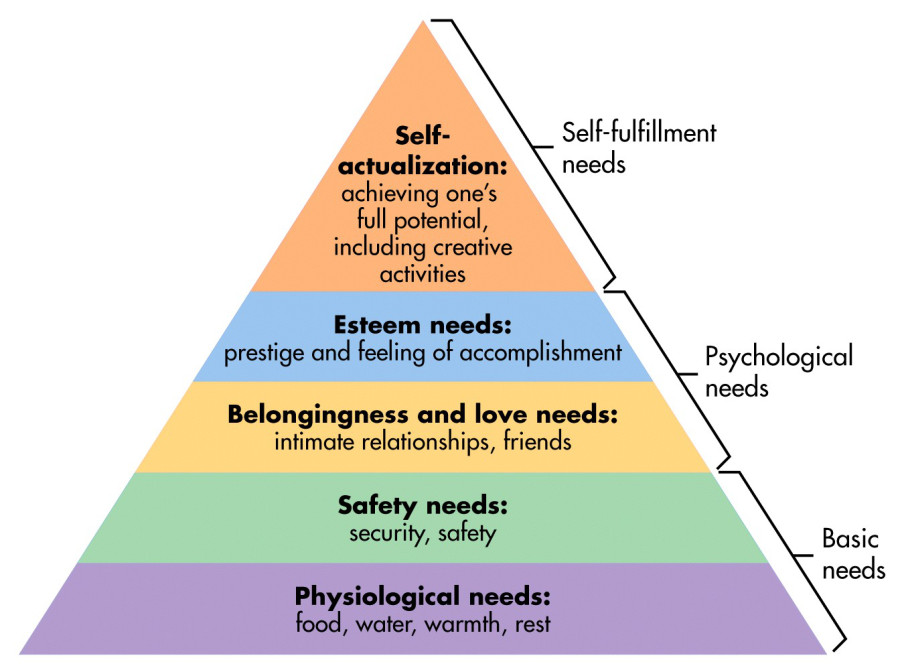
According to Solomon, Bennett and Previte (2019), Maslow proposed that human behavior and consumer decision making are motivated by five need levels in his hierarchy. Maslow’s work is represented by a pyramid, the hierarchy had five levels of human needs, from the most basic to the most evolved: Physiological, safety, belongingness, ego needs and self-actualisation (Solomon, Bennett & Previte 2019). Despite the popularity of Maslow’s hierarchy with marketers, its application has been somewhat simplistic, especially as the same product or activity can satisfy a number of different needs.
Applied to Lego, the key determinant of Lego success is closely connected to these motivational drivers. Lego has effectively appeal to more than 3 basic needs of its customer: Ego needs, Belongingness and self-actualisation.
Lego has helped children develop the right mix of academic and life skills, such as creativity, problem-solving, communication and confidence. When children play with the bricks, they can use their imagination to make anything possible. They can build a starship, a castle or a dinosaur as there are endless of possibilities with Lego bricks. Connecting small pieces of Lego to create a final product that follows a child’s vision can be challenging. And achieving this task holds immense sense of satisfaction that is obvious in a child’s smile when they proudly show off their completed work. This in turn will improve children’s confidence and self-esteem. In addition, Lego play also foster confidence by helping children to develop problem-solving skills where children take picture of what they want to build and has to problem solve to make it look like the picture.
Confidence and self-esteem begin to become important as children move from playing alongside others to actively playing and collaborating with them. And basic friendships and social skills begin to emerge. During Lego play, children practice social skills and social interactions in a setting where the stakes are low. Through play, children learn to come up with ideas with others, share, cooperate, and think about other people’s perspectives. This shows that Lego helps to build social needs too.
Finally, with all other needs met, Lego also helps children to achieve self-actualisation, which they can realise their full potential of building what they want and becoming the most they can be.
According to Solomon, Bennett and Previte (2019), Maslow proposed that human behavior and consumer decision making are motivated by five need levels in his hierarchy. Maslow’s work is represented by a pyramid, the hierarchy had five levels of human needs, from the most basic to the most evolved: Physiological, safety, belongingness, ego needs and self-actualisation (Solomon, Bennett & Previte 2019). Despite the popularity of Maslow’s hierarchy with marketers, its application has been somewhat simplistic, especially as the same product or activity can satisfy a number of different needs.
Applied to Lego, the key determinant of Lego success is closely connected to these motivational drivers. Lego has effectively appeal to more than 3 basic needs of its customer: Ego needs, Belongingness and self-actualisation.
Lego has helped children develop the right mix of academic and life skills, such as creativity, problem-solving, communication and confidence. When children play with the bricks, they can use their imagination to make anything possible. They can build a starship, a castle or a dinosaur as there are endless of possibilities with Lego bricks. Connecting small pieces of Lego to create a final product that follows a child’s vision can be challenging. And achieving this task holds immense sense of satisfaction that is obvious in a child’s smile when they proudly show off their completed work. This in turn will improve children’s confidence and self-esteem. In addition, Lego play also foster confidence by helping children to develop problem-solving skills where children take picture of what they want to build and has to problem solve to make it look like the picture.
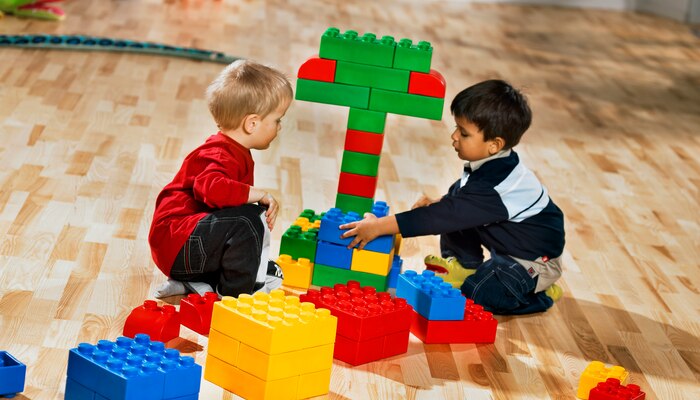
Confidence and self-esteem begin to become important as children move from playing alongside others to actively playing and collaborating with them. And basic friendships and social skills begin to emerge. During Lego play, children practice social skills and social interactions in a setting where the stakes are low. Through play, children learn to come up with ideas with others, share, cooperate, and think about other people’s perspectives. This shows that Lego helps to build social needs too.
Finally, with all other needs met, Lego also helps children to achieve self-actualisation, which they can realise their full potential of building what they want and becoming the most they can be.
References
Solomon, MR, Bennett, RR & Previte, J 2019, Consumer Behaviour, Australia Group, Sydney.


