There are many brands in the marketplace that possess strong gender identities. For example, Marlboro for masculine image and Channel for feminine image. And research shows that gender roles and brand concept can have a significant effect on brand extension evaluations (Jung 2006). Over the years, cross-gender brand extensions are a strategy that has quickly grown to become a vital component of strategic communications management due to the unisex trend in consumer goods (Jung 2006). So…back to the topic – LEGO, which is an unisex brand or used to be of it.
When I was a kid, I used to had a bucket of Lego bricks to played with my brother. And Lego had not much to do with gendered play and everyone played with the same bricks. However, in the past few years, it seems to have a public criticism of The LEGO Group’s gendered marketing of its toys. The criticism became intense especially after its released of “LEGO Friends” in 2012, which aimed especially at girls (Czerski 2014). The sets are predominantly pink, simple to construct and celebrating not architecture and action but beauty salons, cupcake bakeries and poodle parlours (Betts 2012). What made it even more depressing was that the company claimed it was the result of extensive research of ‘the way girls naturally build and play’ (The Lego Group, 2011).
Back to the 60s, LEGO bricks were originally marketed as toys for boys and girls equally (Madrid 2015). However, since 1980, LEGO’s product shift from its initial relatively, gender neutral to a more male dominated toy and gendered play (Madrid 2015). This can be reflected in their packaging, commercial campaign and its product.
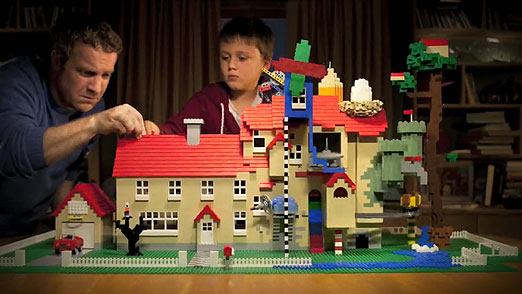
For example, we can always see commercial for LEGO highlighting some of the special moments of a father and a son bonding over building things together. It’s not a problem for LEGO featuring a father-son stories, yet, why is it so rare to see a grandma, mothers or daughter in this build together market campaign? In contrast, LEGO Friends commercials show only female children, and strongly marketed in a way that this toy is not for boys.

Besides that, the design of Lego’s products are also almost exclusively to boys, where girls have been largely left out. Try to look at this first plastic people, now known as ‘minifigs’, which had fun hairstyles, endearing smiles, and arms that bent and swiveled. The minifig is an iconic symbol of LEGO brand, over the years, Lego had shifted the initially gender-neutral minifigure to a gendered minifigure, which they have now got facial hair, eyelashes or lipsticks. As Lego has provided more detail in the face and bodies of minifigures, gender identification in minifigure faces became a thing and people started concern on the male:female ratio of the gendered minifigures (Ramblingbrick 2016). (To know more about the gender distribution of Lego’s minifigure, read this https://ramblingbrick.com/2016/09/29/living-with-divercity-changing-depictions-of-gender-roles-with-lego-minifigures-in-the-post-friends-era/)
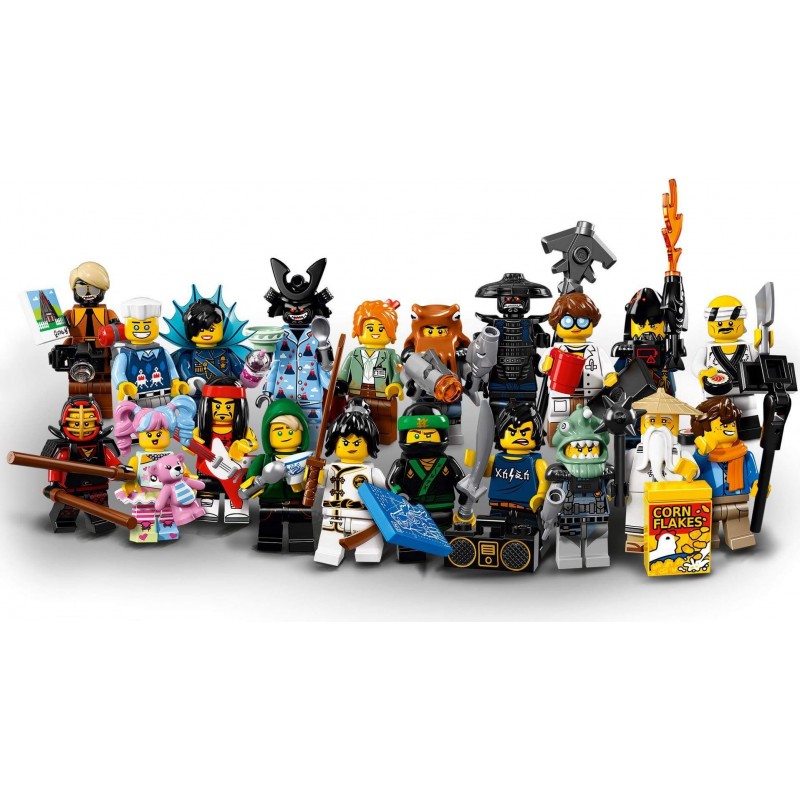
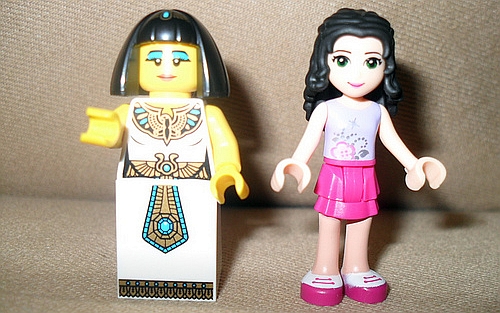
As a case in point, Lego Friends line introduced someplace called Heartlake City, which is a pastel coloured gender segregated stereotypically female suburban paradise (Czerski 2014). In order to make it optimized to girl’s interest and tastes, Lego recreated their minifig to a more doll-alike minifig, a taller and slimmer version with big, big eyes, raised button nose, pointed chin and wearing a short skirt. I know that barbie dolls are popular among girls, and Lego is trying to find way to integrate the LEGO experience into this existing model of play, but one that nevertheless perpetuated stereotypes. Besides that, the Lego Friends set covered everything in pink and purple, from the packaging to the bricks themselves. There’s nothing wrong with pink and purple as girls seem fond these colours, however, the problem is pink and purple are hardly appear in the Lego City sets marketed to boys. In addition, the friends theme sets focus on traditionally female identified tasks: bakery, beauty salon, homemaking, vet, which are rooted in deeply stereotypical and limiting roles for women in children’s toys, while you cannot find any beauty salon in the Lego City (Black, Tomlinson & Korobkova 2016). And this make me feel like they are selling the idea that girls and boys cannot play with the same toys, that girls have to have “special Lego”, which are inferior to boy toys. At least that’s what the marketing tell us.
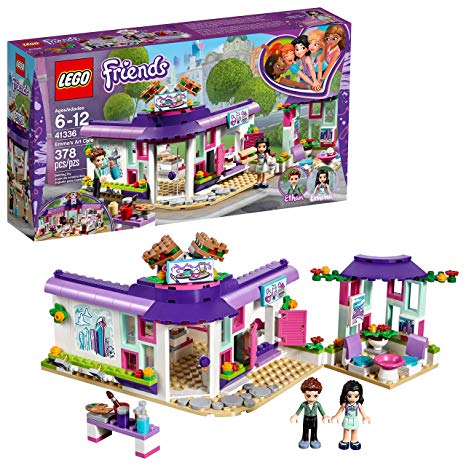
Indeed, tens of thousands of people signed a petition complaining about the message that Lego Friends subtly sends to children about what girls should value (Lafrance 2016). I’m not surprise that there’s a lot of momentum around this Friend Line as most of the parents want their kids to have alternatives to gender-biased toy that encourage boys and girls to play together with each other.
According to Lafrance (2016), the blog mentioned that “If Lego wants to convey the idea that any kid can play with any of its products, for example, it’s strange that Friends are found on the Lego website under a subhead “Girls“, the implication being that the rest of the site is not for girls (And that girls themselves are in a subcategory of children.)”
In my opinion, it’s technically no wrong to have a gendered marketed toy for Lego (eg. Lego Friends), but Lego should change the way they marketed their toys, or else the arguments for and against Lego Friends will not be stopped.
How do you think of Lego Friends and its marketing technique? As a parent, will you buy Lego Friends for your child?
References
Betts, H 2012, ‘Lego Friends petition: why feminists should think twice before they sign’, The Guardian, 5th September, assessed 1st May 2019, <https://www.theguardian.com/commentisfree/2012/sep/04/lego-friends-feminists-think-twice>
Black, R.W, Tomlinson, B & Korobkova, K 2016, ‘Play and identity in gendered LEGO franchises’, International Journal of Play, vol.5, no.1, pp64-76, <https://www-tandfonline-com.ezproxy.uow.edu.au/doi/pdf/10.1080/21594937.2016.1147284?needAccess=true>
Czerski, H 2014, ‘Lego still builds gender stereotypes’, The Guardian, 6th June, assessed 1st May 2019, <https://www.theguardian.com/science/2014/jun/06/lego-gender-stereotypes-scientists-female-minifigures>
Jung, K 2006, “Cross-Gender Brand Extensions: Effects of Gender of Brand, Gender of Consumer and Product Type on Evaluation of Cross-Gender Extensions”, NA – Advances in Consumer Research, Vol. 33, eds. Connie Pechmann and Linda Price, Duluth, MN : Association for Consumer Research, Pages: 67-74.
Madrid, I 2015, ‘From gender neutral beginnings to pink princess themes and today’s female STEM minifigs: LEGO’s messy history of marketing to girls’, PRI’s The World, 2nd July, assessed 1st May 2019, <https://www.pri.org/stories/2015-07-02/gender-neutral-beginnings-pink-princess-themes-and-todays-female-stem-minifigs>
The Lego Group 2011, 19 December, LEGO group to deliver meaningful play experiences to girls with new LEGO FRIENDS, LEGO, <http://aboutus.lego.com/en-us/newsroom/2011/december/lego-group-to-deliver-meaningful-play-experiences-to-girls-with-newlego-friends/>

 May's blog