What is classical conditioning?
According to Solomon, Bennett and Previte (2019), classical conditioning is a form of learning whereby a conditioned stimulus (CS) becomes associated with an unrelated unconditioned stimulus (US) in order to produce a behavioural response known as conditioned response (CR). The conditioned response is the learned response to the previously neutral stimulus.
When you think of “bricks/blocks”, what brand do you associated with? Lego?
Lego is one of the most successful toy brand. Since it was founded in 1932, countless generations of children have grown up with Lego toys. Lego says that on average, every person in the world owns 102 Lego bricks (Hall 2015). Its strong reputation becomes the ultimate competitive in the highly competitive toy industry. Lego provides its consumer an extraordinary range of playing experience, which it gives a sense of empowerment when the player has control over their imagination and ingenuity to build its own Lego. As a result, consumers are emotionally connected with the brand because it repeatedly engaged with their imagination and desires. This would be a good example of classical conditioning that consumer’s play experience and imagination are consistently paired with conditioned stimuli (Lego) in addition to visual logo.
Most of the people associated the toy blocks/bricks with Lego, even the products are not produced by the Lego brand itself. And when we see Lego’s logo, we straight away think of building brick with imagination. The blocks are conditioned stimuli and Lego is the conditioned response, vice versa. This is because we have attributed it – stimulus generalisation. Stimulus generalisation refers to the tendency of stimuli similar to a conditioned stimulus to evoke similar conditioned responses (Solomon, Bennett & Previte 2019).
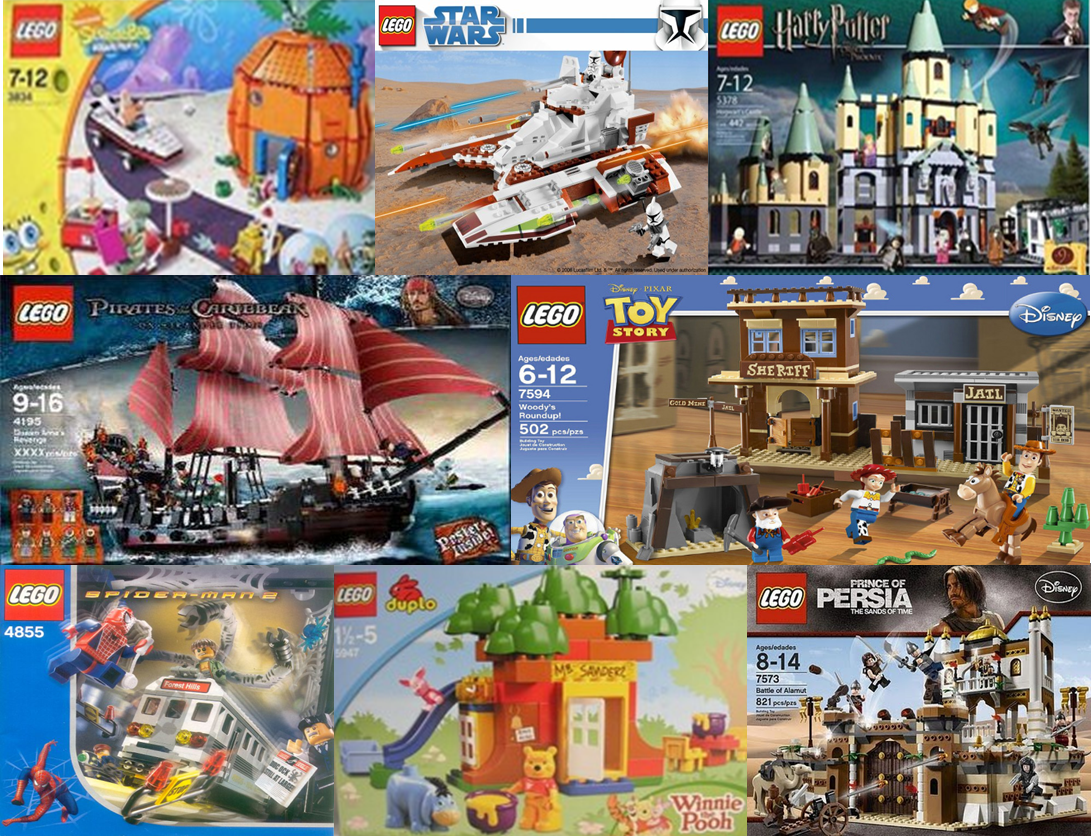
As mentioned in my previous blog, Lego also adopted licensing strategies based on stimulus generalisation. This strategy refers to rented well-known names and linked it with their products or services in order to increase in popularity (Solomon, Bennett & Previte 2019). Lego is consistently fostering its strategy in focusing on creating new sets by adding different features and meanings to existing bricks. And there is where Lego start licencing with the well-established movie studio and other brands and fill its product with the stories and characters meanings. Disney/Pixar, Warner Bros, and Lucas Films are among the partners that have licensed media franchises such as Star Wars, Harry Potter, Scooby-Doo, Disney princess and Jurassic Park (Handley 2019). An example of licensed product is Millennium Falcon (a starship in the “Star Wars” franchise), respectively, it is the Lego’s best-selling product.
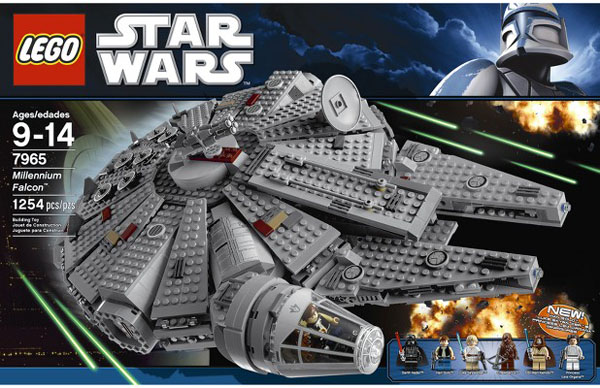
This strategy enabled the company to increase the value of existing products, which made buyers willing to spend more on them. This is because buyer perceive it as a higher value product as consumers not only can create their own Lego story, but also can use the versatility of Lego pieces to create their own version of toy. It’s no surprise Lego has become the one of the most profitable toy company in the world.
References
Hall, T 2015, ‘Here’s what you didn’t know about Lego’, Business Report, 24th November, assessed 10th April 2019, <https://www.iol.co.za/business-report/international/heres-what-you-didnt-know-about-lego-1949952>
Handley, L 2019, ‘How marketing built Lego into the world’s favourite toy brand’, CNBC, 10th April, assessed 10th April 2019, < https://www.cnbc.com/2018/04/27/lego-marketing-strategy-made-it-world-favorite-toy-brand.html>
Solomon, MR, Bennett, RR & Previte, J 2019, Consumer Behaviour, Australia Group, Sydney.


